
What Happens at Your First Visit With a Back Pain Specialist in Napa?
By Jacqueline Weisbein, D.O.
Board-Certified in Physical Medicine & Rehabilitation and Pain Medicine, Fellowship-Trained in Interventional Pain Management
Quick Insights
Your first visit with a back pain specialist involves a comprehensive evaluation that goes far beyond a typical doctor's appointment. During your first visit, I conduct an in-depth assessment including detailed history-taking, physical examination, review of any prior imaging or testing, and collaborative discussion to build your personalized treatment plan. Research suggests that most patients leave their first consultation with clear answers about their pain source, a roadmap for treatment, and often same-day relief through targeted interventional procedures when clinically appropriate.
Key Takeaways
- Your initial consultation typically lasts 45-60 minutes and includes a thorough physical exam, medical history review, and diagnostic assessment
- I evaluate not just your pain location but the underlying mechanisms, including nerve involvement, spinal mechanics, and functional limitations
- You'll receive a clear diagnosis and personalized treatment plan that may include interventional procedures, regenerative therapies, or advanced neuromodulation options
- Many patients begin treatment during their first visit, with minimally invasive procedures performed in-office when clinically appropriate
Why It Matters
For active adults managing chronic back pain while maintaining demanding careers, family responsibilities, and an active lifestyle, understanding what happens during your first specialist visit removes a significant barrier to seeking care. Many people delay consultation because they don't know what to expect or worry about being pressured into surgery or long-term medication management. A fellowship-trained interventional pain specialist offers a different approach, one focused on identifying the precise pain generator and addressing it with targeted, minimally invasive treatments that preserve your ability to work, travel, and enjoy the outdoor activities that make this region special.

What Should You Expect at Your First Appointment With a Back Pain Specialist in Napa?
Walking into a pain specialist's office for the first time can feel overwhelming. You might wonder whether your pain is "bad enough" to warrant specialty care, worry about being dismissed, or fear being pushed toward surgery you're not ready for. These concerns are completely normal, and understanding what actually happens during a comprehensive pain management consultation can ease much of that anxiety.
A first visit with an interventional pain specialist is fundamentally different from a typical primary care appointment. It's longer, more detailed, and laser-focused on building a precise diagnosis and personalized treatment roadmap. Stanford Health Care describes the comprehensive first-visit workflow used at major academic medical centers: patients receive a thorough evaluation including physical examination, history review, potential additional testing or imaging review, team discussion of recommendations, and communication with the referring clinician.
As a Double Board-Certified physician in Physical Medicine & Rehabilitation and Pain Medicine and Fellowship-Trained Interventional Pain Specialist, I bring this same comprehensive approach to patients throughout Napa Valley. With thousands of procedures performed over a decade and a half, I combine deep clinical expertise with the kind of unhurried, personalized attention that's essential for understanding complex pain conditions.
This article will walk you through exactly what happens during your initial consultation: the intake process, what gets evaluated during the physical exam, how diagnostic testing informs treatment decisions, and how a treatment plan is collaboratively built based on your specific presentation and goals.
Important Safety Information
Before your first visit, gather your complete medical records, current medication lists (including all supplements), and any prior imaging studies like MRI, CT, or X-rays. These documents help me build the full picture of your spine health and pain history.
Certain medical conditions require additional precautions or modified evaluation approaches: active infection, current anticoagulation therapy, pregnancy, or severe osteoporosis. Disclose all current treatments including over-the-counter medications and supplements, as some may interact with interventional procedures.
The consultation itself is non-invasive and diagnostic in nature. While some patients receive same-day treatment if a clear diagnosis is established and an appropriate procedure can be safely performed in-office, the primary goal of your first visit is thorough evaluation and collaborative treatment planning.
How a Back Pain Specialist Evaluates Your Condition Differently
I approach your back pain with a fundamentally different lens than what you might experience in a typical primary care or even orthopedic visit. The evaluation is comprehensive, multimodal, and designed to identify the specific pain generator rather than just the general area that hurts.
The assessment has three core components working together. First, detailed pain history, not just "where does it hurt" but understanding onset, character, radiation patterns, aggravating and relieving factors, prior treatments tried, and how those treatments performed. NIH/NINDS emphasizes the importance of comprehensive pain assessment including thorough history-taking and holistic evaluation as the foundation of effective pain management.
Second, functional assessment, examining how pain affects your daily activities, work capacity, sleep quality, and overall quality of life. This matters because two patients with identical imaging findings can have vastly different functional limitations. Understanding what you're unable to do (or what you're forcing yourself to do despite pain) shapes treatment strategy as much as your pain intensity scores.
Third, physical examination focused on localizing the pain source. This goes beyond standard range of motion testing to include neurological assessment, palpation of spinal structures, and provocative maneuvers that help distinguish between disc pain, facet joint dysfunction, SI joint involvement, or nerve root compression.
North American Spine Society provides an evidence-based framework for evaluating and managing adult low back pain, emphasizing a comprehensive, multidisciplinary approach. Critically, the guideline explicitly notes that protocols must be tailored to individual patients and clinical settings; while evidence-based standards guide the evaluation, every assessment is customized to your specific presentation and goals.
The Permanente Journal 2021 found that in a primary-care-based multidisciplinary clinic, a comprehensive multimodal approach was associated with substantial decreases in opioid use over 12-36 months and modest improvements in pain scores, though the study was retrospective and limited to a single-site military population which may limit broader applicability. Still, the research supports the value of extended, integrated intake when managing chronic pain.

The Four Key Components of Your Initial Assessment
Medical History and Pain Mapping
The conversation goes far beyond "where does it hurt." I'll ask about your pain patterns: is it constant or intermittent? Does it radiate down your legs? What time of day is it worst? Does bending forward or backward change it? Do you get relief when sitting, standing, or lying down?
Understanding what makes your pain better or worse provides critical diagnostic clues. Pain that improves when leaning forward on a shopping cart suggests spinal stenosis. Pain that worsens with prolonged sitting points toward disc involvement. Leg pain that follows a specific nerve distribution helps localize nerve root compression.
You'll also discuss every treatment you've tried (physical therapy, chiropractic care, medications, injections) and how well each worked. NIH/NINDS emphasizes that this comprehensive history-taking and holistic pain evaluation forms the foundation for accurate diagnosis and effective treatment planning.
This conversation helps identify whether your pain is primarily mechanical (related to movement and position), neuropathic (nerve-related), or mixed, a distinction that fundamentally shapes your treatment strategy.
Physical Examination and Functional Testing
During the physical exam, I assess range of motion, perform neurological testing (checking reflexes, sensation, and muscle strength in your legs), palpate spinal structures to identify areas of tenderness, and use provocative maneuvers to help localize the pain source.
Research on physical examination accuracy provides important context. BMC Musculoskeletal Disorders 2013 found that in spine clinic populations, individual physical examination tests for lumbar radiculopathy showed limited diagnostic accuracy, and even the clinician's overall evaluation using all index tests provided only modest improvement compared to MRI/CT reference standards. Similarly, Spine 2006 demonstrated through systematic review that many physical examination tests for lumbar spinal stenosis have limited diagnostic accuracy when used in isolation.
However (and this is crucial), physical examination findings are most valuable when interpreted together with your history and any available imaging, rather than relying on any single test in isolation. The comprehensive clinical picture, not any one finding, guides diagnosis.
Mayo Clinic outlines the range of diagnostic procedures used in pain medicine evaluation, from standard neurological testing to more specialized assessments when needed.
Imaging and Diagnostic Test Review
If you bring prior MRI, CT, or X-ray studies, I'll review them during your visit and correlate the imaging findings with your clinical presentation. What shows up on an MRI doesn't always match what's causing your pain; some people have significant disc herniations with minimal symptoms, while others have moderate imaging findings but severe functional limitations.
If your prior imaging is outdated (typically older than 6-12 months if symptoms have changed) or doesn't adequately visualize the suspected pain generator, new imaging may be ordered as part of your evaluation.
Some patients may require diagnostic procedures like selective nerve blocks or EMG/nerve conduction studies to confirm the pain source before proceeding with definitive treatment. Mayo Clinic describes these diagnostic tests and procedures as integral parts of comprehensive pain medicine evaluation when clinical examination and imaging don't provide a clear answer.

How Your Treatment Plan Takes Shape
Once I've completed the evaluation, I'll explain what I've found: the likely pain generator, why conservative treatments may not have worked, and what anatomical or functional factors are contributing to your symptoms. This collaborative discussion forms the foundation of your personalized treatment plan.
The spectrum of available treatments is broad: physical therapy and targeted rehabilitation for patients who haven't yet tried appropriate therapeutic exercise, interventional procedures like epidural steroid injections or nerve blocks for diagnostic or therapeutic purposes, radiofrequency ablation to reduce pain signals from specific nerves, regenerative therapies, and advanced neuromodulation including spinal cord stimulation for complex or treatment-resistant chronic pain.
Cleveland Clinic describes this plan development and follow-up process as central to pain management consultation, explaining findings in accessible language, discussing treatment options with realistic outcome expectations, and building a staged approach based on severity and prior treatment responses.
Treatment plans are adaptive, not fixed. In my practice, I start with less invasive options when appropriate for patients new to interventional care. But for patients who've already tried months or years of physical therapy and medication without adequate relief, we don't delay effective interventional treatment just to repeat what's already failed.
Many patients begin treatment during their first visit when a clear diagnosis is established and an appropriate procedure can be performed safely in-office. Stanford Health Care notes that comprehensive pain programs involve team discussion of recommendations and coordination with referring physicians, ensuring continuity of care throughout your treatment journey.
As a national trainer in neuromodulation and minimally invasive procedures, and one of the nation's top neuromodulation implanters, I offer the full spectrum of treatment options under one roof. This depth of experience allows me to provide accurate diagnosis and access to advanced interventions, from basic injections to cutting-edge neurostimulation, without requiring referral to multiple specialists.
You can explore options for comprehensive back pain treatment tailored to your specific diagnosis and functional goals.
Why Napa Valley Residents Choose Specialized Pain Management
For professionals in Napa, Yountville, and St. Helena who can't afford prolonged trial-and-error with their pain management, having fellowship-trained interventional pain expertise locally changes everything. You don't need to travel to San Francisco or Sacramento for advanced procedures like spinal cord stimulation, SI joint fusion, or Intracept.
Active adults who want to return to hiking the trails around Calistoga, cycling through wine country, or playing golf without limitations benefit from the boutique practice model: longer appointments, continuity of care with the same physician throughout treatment, and personalized attention that's impossible in high-volume clinics.
Hospitality and wine industry workers whose livelihoods depend on physical function need efficient, effective solutions. The same is true for retirees who moved to this area specifically for its lifestyle and refuse to let back pain limit their enjoyment of everything they worked toward.
In a region served by Providence Queen of the Valley Medical Center for acute care needs, residents seeking specialized interventional pain management can access fellowship-trained expertise right here in Napa without the hour-plus drive to major metro centers.
The boutique practice approach through Napa Valley Orthopaedic Medical Group allows for the kind of thorough evaluation and collaborative treatment planning that distinguishes specialty pain care from rushed, production-focused medical appointments.

When Should You Consider Seeing a Back Pain Specialist?
Recognizing when your back pain warrants specialist consultation isn't always obvious. You don't need to meet some arbitrary threshold of severity or dysfunction, but certain patterns suggest it's time for that conversation.
Consider specialist evaluation if your back pain has lasted longer than 6-8 weeks despite conservative treatment with physical therapy and medication. Pain that radiates into your legs with numbness, tingling, or weakness signals potential nerve involvement that benefits from precise diagnosis.
If pain is affecting your ability to work, sleep, or participate in activities you value (even if the pain itself isn't constant or severe), that functional impact matters and warrants evaluation. You've tried physical therapy and medication without adequate relief, yet you're not ready for (or not a candidate for) major spine surgery.
Many patients worry about long-term opioid use and want to explore interventional options that address pain at its source rather than masking symptoms. Others have been told by their primary care provider that specialist evaluation is recommended but aren't sure what that means or whether it will help.
American Academy of Pain Medicine provides guidance on clinical indicators warranting pain specialist consultation, recognizing that pain medicine specialists offer diagnostic capabilities and treatment options that extend well beyond what's available in primary care settings.
You may be a good fit for specialist evaluation if you're motivated to explore treatment options beyond medication, willing to participate actively in your care plan, and looking for a physician-led practice that takes time to understand your specific pain presentation. Talk to your primary care physician first if you have unstable medical conditions requiring optimization before interventional procedures, or if you're uncertain whether your pain warrants specialty evaluation; a brief conversation can help clarify next steps.
Here's what's important to understand: you don't need to wait until pain is unbearable or function is severely limited. Earlier intervention often leads to better outcomes and prevents chronic pain patterns from becoming entrenched. Pain medicine specialists are specifically trained to diagnose complex pain conditions and offer minimally invasive treatments that may restore function without major surgery.
What Your First Visit at Our Napa Practice Looks Like
Let's walk through the practical details. Many patients complete intake paperwork online before arrival, which speeds the check-in process. Your consultation will typically last 45-60 minutes (significantly longer than a standard medical appointment) because thorough evaluation can't be rushed.
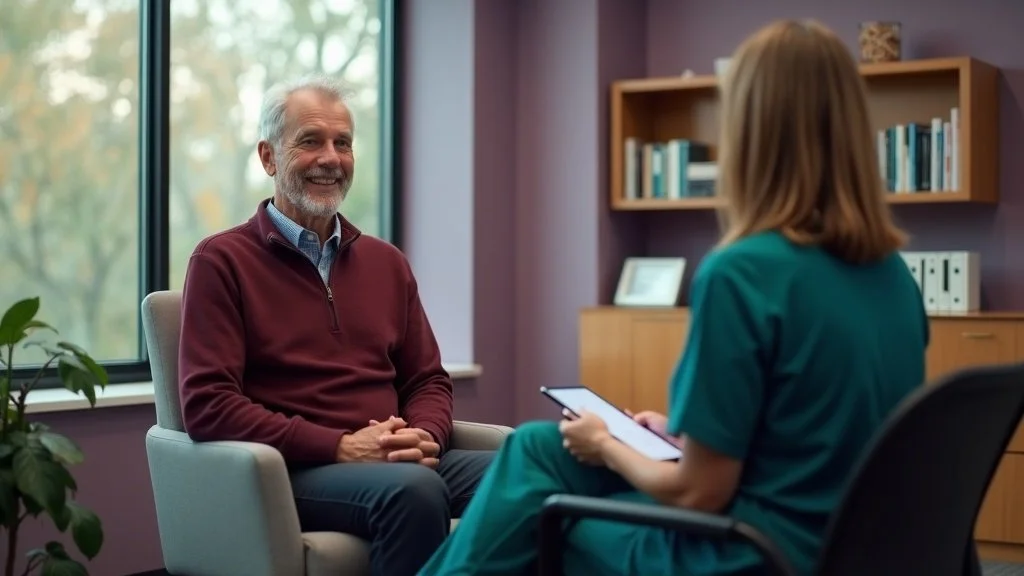
In the exam room, you'll sit down with me for a detailed conversation about your pain history, functional limitations, prior treatments, and goals for care. This isn't a rushed interaction. The conversation flows naturally, with time for you to explain what you're experiencing and ask questions.
The physical examination follows, where I'll assess your movement, neurological function, and specific pain patterns. If you brought imaging studies, we'll review them together on screen, and I'll walk you through what the images show and how those findings correlate (or don't correlate) with your symptoms.
I explain findings in clear, accessible language without medical jargon. Treatment options are discussed with visual aids when helpful, realistic outcome expectations, and transparent information about what each option involves. This is shared decision-making, where your goals and preferences shape the treatment plan as much as the clinical findings.
You'll leave with a clear diagnosis, a personalized treatment plan, and often scheduled follow-up procedures. When a clear pain generator is identified and an appropriate interventional procedure can be safely performed in-office, many patients begin treatment during their first visit.
The practice coordinates with your referring physician and provides a comprehensive visit summary. At Napa Valley Orthopaedic Medical Group, the boutique practice model allows for longer appointments and continuity of care with the same physician throughout your treatment journey, not rotating through different providers at each visit.
| Aspect | Comprehensive Pain Medicine Consultation | Standard Primary Care Visit for Back Pain |
|---|---|---|
| Appointment length | 45-60 minutes | 15-20 minutes |
| Evaluation scope | Detailed pain history, functional assessment, comprehensive physical exam, imaging review, diagnostic testing when needed | Brief history, focused physical exam, often limited by time constraints |
| Diagnostic approach | Identifies specific pain generator using multimodal assessment | Symptom-based diagnosis, may rely primarily on imaging |
| Treatment options discussed | Full spectrum from conservative to interventional (injections, nerve blocks, radiofrequency ablation, neuromodulation, regenerative therapies) | Primarily medication and physical therapy referral |
| Physician training | Fellowship-trained interventional pain specialist | Generalist training across all body systems and conditions |
| Treatment initiation | Often same-day for appropriate interventional procedures | Referral to specialist for advanced treatments |
Hear From Our Community
"I thoroughly enjoyed my first visit with Doctor Weisbein. I felt heard and that doctor Weisbein truly understood my medical condition... A plan to address my chronic pain was made and I'm very hopeful."
— Adria
Excerpt from a publicly shared patient review. Individual experiences vary.
Adria's words reflect what comprehensive pain management consultation should feel like: being heard, having your condition understood, and leaving with a clear plan and realistic hope for improvement.
Conclusion
Your first visit with a back pain specialist is a comprehensive, collaborative experience designed to identify your specific pain source and build a personalized treatment roadmap. Unlike rushed primary care appointments, this consultation gives you time to fully explain your symptoms, undergo thorough evaluation, and discuss treatment options that may include interventional procedures not available in standard medical settings.
You'll leave with clarity about your diagnosis and a plan that may include targeted nerve blocks, radiofrequency ablation, regenerative therapies, or advanced neuromodulation, treatments that address pain at its source rather than just masking symptoms.
You don't need to live with chronic back pain or rely solely on medication. Advanced, minimally invasive treatments are available right here serving patients throughout Napa Valley and Wine Country. If back pain is limiting your work, activities, or quality of life, schedule a consultation at my practice in Napa to explore whether interventional pain management is right for you.
Ready to Take the Next Step?
Schedule your comprehensive pain management consultation in Napa to discuss personalized treatment options for your back pain.
Schedule Your Consultation →This article is for educational purposes only and should not be used as a substitute for professional medical advice, diagnosis, or treatment. Always seek the advice of your physician or other qualified healthcare provider with any questions you may have regarding a medical condition or treatment options. Never disregard professional medical advice or delay in seeking it because of something you have read in this article.
Board-Certified in Physical Medicine & Rehabilitation and Pain Medicine · Fellowship-Trained Interventional Pain Specialist · Napa Valley Orthopaedic Medical Group